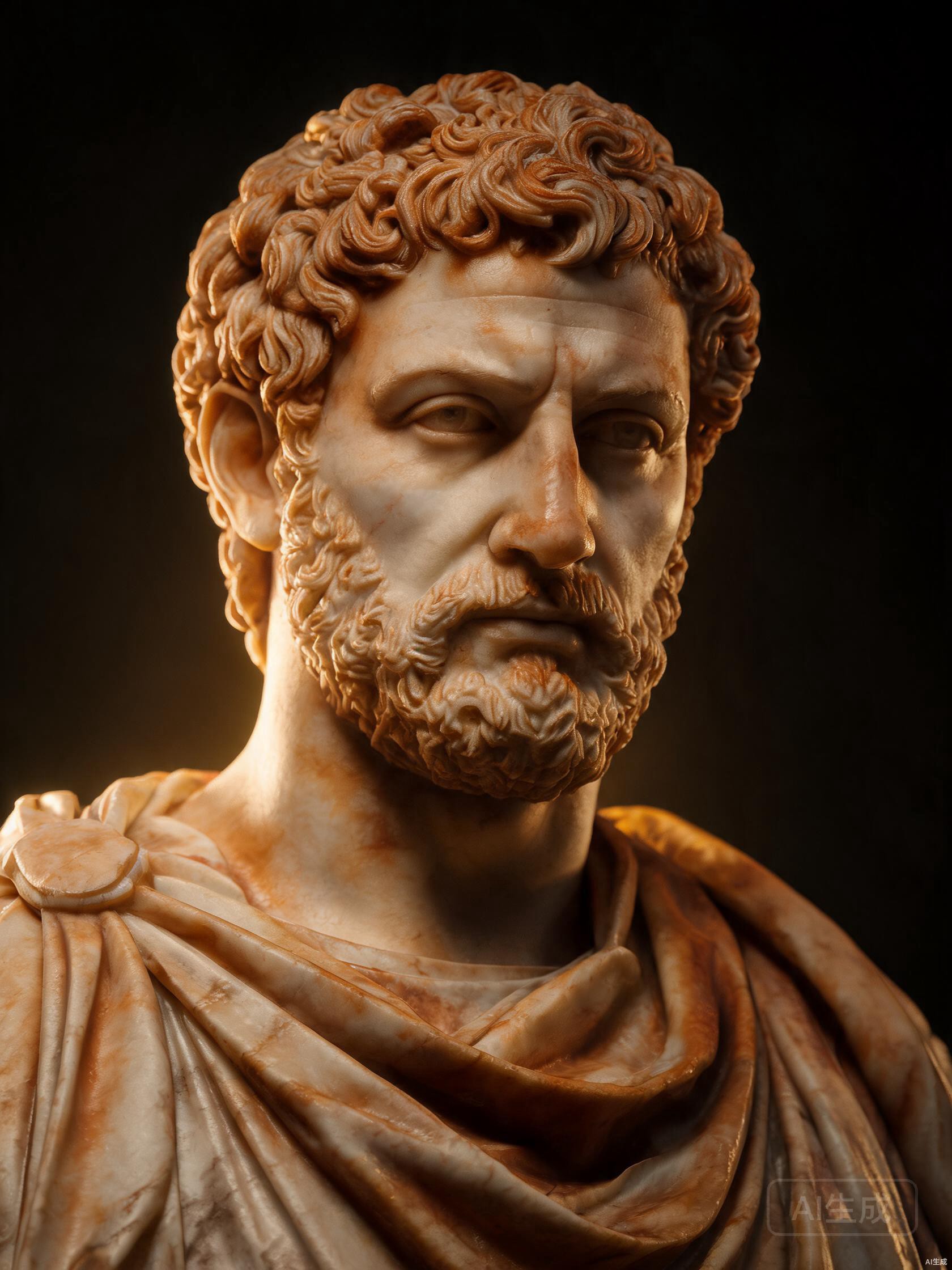
Stoicism × a restless mind
Stoic Quotes for Overthinking: Eight Cuts from Marcus, Epictetus, and Seneca
The thought is not the event. These lines sort what is yours, then leave the rest
The thought is not the event. These lines sort what is yours, then leave the rest
People look up Stoic quotes for overthinking when a thought has already taken the evening and a slogan is the shortest thing they can hold. A quote is not a spell. It is a cut: a way to tell a fact from the judgment you are still adding, and to put the thought down once you have named the part that is still yours.
The lines below are from the public-domain English of George Long (Marcus Aurelius and Epictetus) and Richard Gummere (Seneca), lightly modernized in the pronouns, each with its book or letter. They are not new sayings invented for the internet, and they are not medical advice. If a sentence is useful, it is useful because you can test it on one circling thought tonight. If you want two voices — Laozi and Marcus — on the thought itself, write a free first letter.
Overthinking is often a second labor. The first look names what happened, or what might. The second look hires the rest of the night as a court. Stoicism does not ask you to care less. It asks which part of the loop is still an action, and which part is a judgment you can set down. The Taoist companion to that cut — an open hand, not a tighter grip — is on Taoism for overthinking. This page stays with the quotes themselves, and with how to use them without turning them into a new loop.
A quote that only decorates the room leaves the thought in charge. A quote that splits a fact from a judgment can be put down with the thought.
"Men are disturbed, not by things, but by the principles and notions which they form concerning things." — Epictetus, Enchiridion 5, trans. George Long
This is the sentence most people are reaching for when they search for Stoic quotes about overthinking. The email is sent. The remark was said. The thing is already itself. What keeps the evening is the view you are still forming: that the thing now means you are the kind of person who ruins a night, or that one more rehearsal will finally make it safe. The cut is not "nothing happened." The cut is "the happening and the view are not the same labor."
"Some things are in our control and others not. Things in our control are opinion, pursuit, desire, aversion, and, in a word, whatever are our own actions. Things not in our control are body, property, reputation, command, and, in one word, whatever are not our own actions." — Epictetus, Enchiridion 1, trans. George Long
Write the thought as two columns. Yours: the next sentence you can still send, the repair that is still an action, the opinion you are adding now. Not yours: their face after you spoke, a reputation already out of your hands, a tomorrow that has not arrived. Overthinking often treats the second column as a task. Epictetus would take it off the list. The longer walk through that split, without the quotes as the center, is Stoicism for overthinking.
"If you are pained by any external thing, it is not this thing that disturbs you, but your own judgment about it. And it is in your power to wipe out that judgment now." — Marcus Aurelius, Meditations 8.47, trans. George Long
Marcus is writing to himself, in a camp, about a pain that feels identical with the event. He refuses the identity. The event may already be finished. The judgment is present, and present is the only tense in which you can set it down. "Now" is not a dare to feel nothing. It is a permission to stop adding a verdict to an hour that cannot use one more verdict.
"Wipe out the imagination. Stop the pulling of the strings. Confine yourself to the present." — Marcus Aurelius, Meditations 7.29, trans. George Long
This is the most exact of the Stoic quotes for a mind that is rehearsing. Imagination here is not creativity. It is the theater in which a conversation is staged again, or a future remark is practiced until it feels like a fact. "The pulling of the strings" is the sense that the thought is moving you. Confining yourself to the present is not a mood. It is a refusal to let a scene that is not in the room keep hiring the body.
"There are more things, Lucilius, likely to frighten us than there are to crush us; we suffer more often in imagination than in reality." — Seneca, Letters to Lucilius 13.4, trans. Richard Gummere
Seneca is writing to a friend who is afraid of what has not yet happened — and, often, of what has already been imagined more times than it has been lived. Overthinking borrows suffering from a scene that may never be asked to pay. The cut is to ask, of the thought that is running: is this a fact in the room, or a rehearsal? If it is a rehearsal, you have already paid more than the event has collected.
"Take away your opinion, and then there is taken away the complaint, 'I have been harmed.' Take away the complaint, 'I have been harmed,' and the harm is taken away." — Marcus Aurelius, Meditations 4.7, trans. George Long
This is easy to misread as a claim that nothing can wound you. Marcus is narrower. A finished slight, a clumsy sentence, a look you cannot unsay: the event is one thing. The complaint "I have been harmed" is a second thing, and it is the second thing that keeps reporting for work in the morning. Take away the opinion you are still writing, and what remains is the fact, which no longer needs a trial. If the fact is a moment that still makes your face hot, that moment has its own page: how to let go of embarrassment from the past.
"Such as are your habitual thoughts, such also will be the character of your mind; for the soul is dyed by the thoughts." — Marcus Aurelius, Meditations 5.16, trans. George Long
A single pass over a mistake is memory. A habitual pass is dye. Marcus is not scolding you for having the thought. He is noticing that what you rehearse becomes the color the next hour arrives in. The practical cut is small: one more reading is a choice about the dye, not a duty to the old event. If the loop has already lost the shape of a single thought and become weather, stay with how to stop rumination.
"Men seek retreats for themselves, houses in the country, seashores, and mountains; and you too are wont to desire such things very much. But this is altogether a mark of the most common sort of men, for it is in your power whenever you shall choose to retire into yourself." — Marcus Aurelius, Meditations 4.3, trans. George Long
Overthinking often bargains for a change of scene: if I can just get to the weekend, the quiet, the other city, the thought will loosen. Marcus does not mock the wish for a shore. He notices that the retreat that is actually available is inward, and available now — not as an escape from the fact, but as a place from which you can look at the fact without taking the eighth tour. The mountains in our name are that kind of retreat: two ways of seeing, then a valley, then the next step that is still yours.
A quote becomes another form of overthinking when you collect it, reread it, and never apply it to a sentence. Try this once, with one thought, and then stop.
Write the thought in one sentence of fact. "I sent the note at 11, and they have not answered." Not the story about what the silence means.
Write the judgment you added. "So I have already ruined it." That second line is the "notion concerning things" Epictetus named.
Pick one quote, and ask only its cut. Is this yours or not yours? Is this the event or the view? Is this the present, or a rehearsal? Do the action that is still an action — or set the judgment down. Then leave the page. Another quote is not more medicine. It is more furniture.
If you would rather not do the cut alone, write the thought as a first letter. You get two short replies, one in Laozi's voice and one in Marcus Aurelius's, plus a brief valley between "let go" and "act on what is still yours." The first three letters are free, and no account is required. The letters are AI-written and grounded in the texts; they are not a scholarly edition, and they are not a verdict.
They are not a promise that a restless mind will go quiet on command. They are not a remedy, and they are not a way of calling a hard fact small. A repair that is still possible is still yours. A year you cannot edit is not. If the thought is a finished year of regret rather than a quote you wanted to hold, read how to stop overthinking about the past. If it is one conversation you can still hear, read how to stop replaying conversations. If it arrives only after midnight, read how to stop overthinking at night. The rest sit together on the guides.
The quote is a knife. The letter is two voices using that knife on the thought you actually have.
Leave a sentence a letter can find. The fact, the judgment, the part that is still yours. Write it as it is.
Start with Epictetus, Enchiridion 5: you are disturbed not by things, but by the views you form of them. Then Enchiridion 1, to split what is yours from what is not; Marcus Aurelius 8.47 and 7.29, to set down a judgment and confine yourself to the present; and Seneca's 13th letter, on suffering more in imagination than in reality. Use one cut on one thought, then stop.
Write one sentence of fact and one sentence of judgment. Pick a single quote and ask only its cut: is this yours, is this the event or the view, is this the present or a rehearsal? Do the action that is still an action, or set the judgment down. Collecting more quotes is another loop.
They are from the public-domain English of George Long (Marcus Aurelius and Epictetus) and Richard Gummere (Seneca), with the old pronouns lightly modernized, each cited by book or letter. We do not use internet-only sayings such as 'you have power over your mind — not outside events,' which is a modern paraphrase, not a line from the Meditations.
No. This page is the quotes, and how to use one of them on a single thought. Stoicism for overthinking is the longer essay on the dichotomy of control, without the quotes as the center. Taoism for overthinking is the open hand. A free letter applies both voices to the thought you actually have.
A quote can make a cut. A letter takes your own sentences — the fact, the judgment — and answers them in two voices, Laozi and Marcus Aurelius, with a short valley between. The first three letters are free, and no account is required. The letters are AI-written and grounded in the texts; they are not a scholarly edition, and they are not a verdict.
No. Each line is given with its cut in plain language. You only need one thought, written as a fact and a judgment, and a willingness to stop after one pass.
A few sentences are enough. Laozi and Marcus Aurelius each write back to what you said. Your first 3 letters are free.
Write your first letterCompanion, when you want the writing to continue, is $9.8/mo or $79/yr. A structured week is the 7-Day Reset, $19 one-time. See pricing.