Zen × Stoicism
3 AM Anxiety
Dissolving vs. Directing
Dissolving vs. Directing
It is 3 AM. Your body is a lead weight in the sheets, exhausted in every muscle, and yet your mind is a lit stadium. Every worry you have ever postponed arrives at once, as if the dark gave them a key. You have tried counting breaths. You have tried the magnesium. You have tried putting the phone face-down, which lasts roughly four minutes before the screen lights your face again. Nothing about the advice works, because none of it touches the actual mechanism: a mind that has mistaken its own productions for reality, and is now trying to solve them as though they were problems in the world.
Two philosophers, separated by six centuries and the width of a continent, each saw your 3 AM with a clarity that sleep aids cannot reach. One sat facing a wall in a Chinese monastery for nine years. The other lectured in Rome as a freed slave. They disagree about almost everything, except this: the suffering is not in the event. It is in the relationship between the mind and its thoughts.
Bodhidharma carried Chan Buddhism from India to China in the fifth century, where it would later be called Zen. His teaching is radical in its austerity. He did not promise peace. He promised clarity about where peace had been misplaced. His core insight is that your thoughts are not the world, they are weather in the world. You are not the weather. You are the sky that holds it.
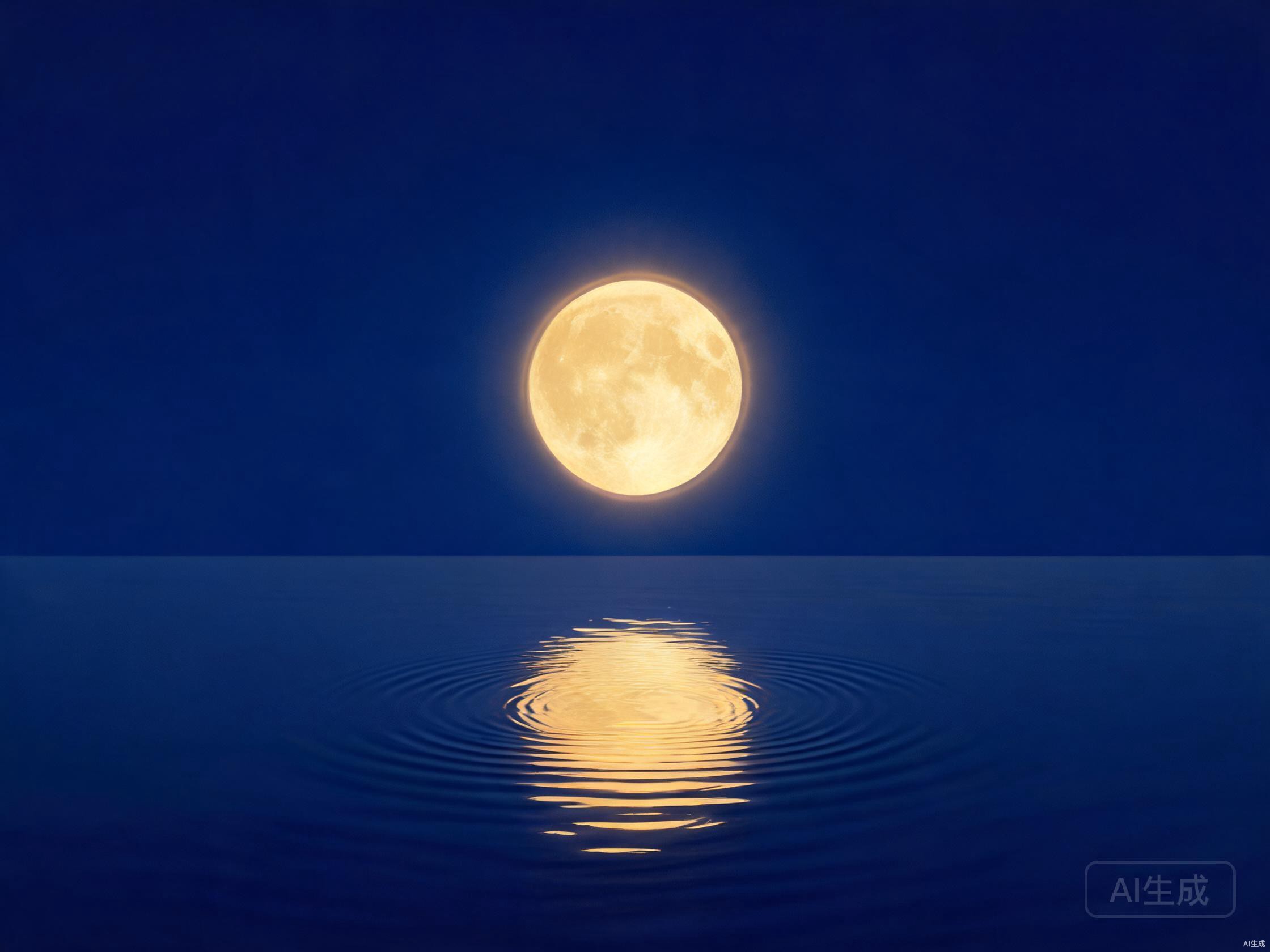
"A mind that seeks is a mind that suffers. Do not seek anything. The future you are worrying about is the reflection of the moon in water. It looks solid. Reach for it and your hand passes through."
Read that slowly. The future you are worrying about is a moon reflection. This is not a metaphor meant to comfort you. It is a diagnosis. At 3 AM your mind is staring at water, mistaking the bright shape on the surface for a thing it can grasp, can fix, can prepare for. Every scenario you rehearse, every conversation you re-litigate, every catastrophe you brace against, has the luminous detail of reality and none of its substance. You cannot touch it because it has not happened. You are exhausting yourself reaching into a reflection.
The future is a moon reflection. It looks real. You cannot touch it. Stop reaching.
Bodhidharma would not tell you to stop thinking. That is a misunderstanding of Zen, and it only creates a second war inside your head, the war against having thoughts. He would tell you to stop following them. A thought arises. You notice it. You do not board the train. You stand on the platform and watch it leave. The breath is the platform. Return to it, not because breathing is magical, but because it is the one thing happening now, in the body, in the only time that actually exists.
He would ask you one question: What happens if, tonight, you simply refuse to solve the future?
Epictetus was born into slavery in the first century and walked with a permanently damaged leg, possibly from a master's beating. He was freed, and became the most influential teacher of Stoicism Rome ever produced. His method is the opposite of mystical. It is an engineer's tool for the mind, and it is the most practical instrument ever invented for the specific misery of 3 AM.
"Some things are within our power, and some are not. Within our power are judgment, intention, desire, aversion. Not within our power: the body, reputation, position, and, in every case, the future."
The dichotomy of control is not a platitude about letting go. It is a sorting operation. Picture a circle. Inside it: your judgments, your next choice, the small act you could take. Outside it: everything else, which includes every single thing your mind is currently screaming about at 3 AM. What time you will wake up rested. Whether the meeting will go well. What they meant by that text. Whether you will be okay. None of it is in the circle. Every minute spent reaching across the line is a minute spent in voluntary suffering, because you are pouring your only real resource, attention, into a vessel with no bottom.
Epictetus was blunt about this. It is not events that disturb people, he said, but their judgments about them. The 3 AM event is not the future. The 3 AM event is a thought about the future, happening now, in your skull. That thought is the only thing actually present, and your judgment that it must be resolved is the only thing actually causing the insomnia.
He would ask you: Draw the circle. What, right now, at this hour, is genuinely within your control? Only whether you keep arguing with the thought, or whether you place it outside the line and let it sit there.
Here is where the easy philosophy advice fails. It tells you to climb one mountain. Dissolve the thought. Or sort the thought. But you are not on a mountain. You are in a valley, and from where you stand you can see both peaks, and you need what each one offers at a different moment of the spiral.
Zen dissolves the cause: the mind treating reflections as real. Stoicism directs the symptom: the wasted energy of grasping at the uncontrollable. Tonight, you might need both.
Zen handles the root. The reason the thought has so much power is that you believe it. You believe the scenario on the water is the actual future. Bodhidharma loosens that belief. Once you see the thought as a reflection, its grip weakens. But seeing it is not always enough to stop reaching for it, because the reaching is a habit older than any single insight. This is where Epictetus enters. Once the thought is seen as a reflection, Stoicism gives you somewhere to put it: outside the circle. Not fought, not followed, not solved. Simply classified, and left on the other side of the line.
Do both, and the spiral loses its engine. The thought still arises, because the mind produces thoughts the way the heart produces beats. But it no longer recruits you. It passes through the sky, you notice it is outside the circle, and you return to the breath. The stadium goes quiet. Not because the players left, but because you stopped buying a ticket.
Tonight, when the spiral begins, try this sequence. It takes about ninety seconds, and you can do it with the lights off.
Step 1 (Eastern): When the first anxious thought arrives, do not argue with it. Say one word, silently: reflection. Not to dismiss it, but to classify it accurately. It is a moon on water. Bright, detailed, untouchable. Watch it shine. Do not reach.
Step 2 (Western): If the thought keeps pulling, draw the circle in your mind. Ask: Is the thing I am worrying about within my control right now, at 3 AM, in this bed? If yes, name one small action for tomorrow and let that be enough. If no, and it almost always is no, place it outside the line. Say silently: Not mine. Not now.
Step 3 (The Valley): Return to the breath. Not because it is sacred, but because it is the bridge between the two mountains. It is partly within your control, you can slow it, and partly outside your control, it happens on its own. It is reflection and reality at once. Follow it down. The future will still be there in the morning, and so will your hands to meet it.
Want Laozi and Marcus to walk through THIS with you — personalized to your story? Try both perspectives free, then upgrade from $7.8/mo for AI-personalized guidance and memory.
Try Two Mountains Free